
When South Africa’s national budget is announced each year, one statistic often dominates the headlines: education remains the largest funded sector in government spending.
The R241.9 Billion Education Budget Reality: Salary & Infrastructure Insights
For the 2025/26 financial year, the education sector received approximately R508.7 billion, making it the single biggest investment in the country’s future. When the Minister of Finance announces that enormous budget for Basic Education alone, the nation exhales. We assume the roofs will be fixed, the toilets will be flushed, and the tablets will be charged.
Within that figure:
-
Basic Education: R332.3 billion
-
NSFAS (Student Financial Aid): R55.4 billion
-
University Transfers: R48.4 billion
-
Skills Development: R27.9 billion
-
TVET Colleges: R14.2 billion
At first glance, these numbers suggest a system that is well resourced.
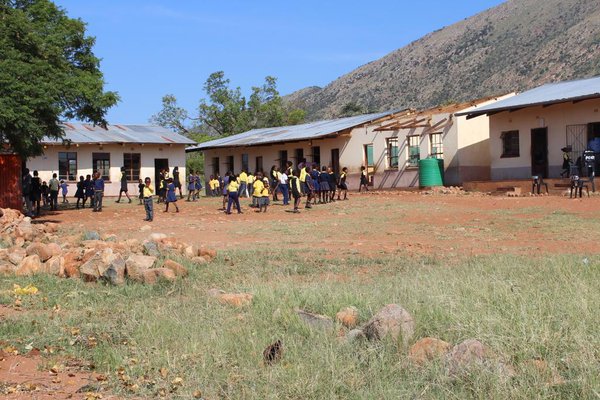
Yet across South Africa, thousands of school principals continue to raise funds for basic infrastructure, classroom repairs, security fencing, sanitation, and digital tools.
The question is obvious.
How can a sector receiving over half a trillion rand still struggle to maintain school buildings?
The answer lies in a structural budget reality that is rarely discussed.
The Salary Reality Behind the Education Budget
Within the R332.3 billion Basic Education allocation, provincial education departments spend approximately 70–76% of their budgets on personnel costs
This includes:
-
Teacher salaries
-
Administrative staff
-
Education support personnel
-
Provincial education employees
In total, about R241.9 billion is allocated to salaries and compensation.
That means nearly three quarters of the education budget is committed before a single classroom is renovated or a new computer is installed.
Put differently:
For every R100 allocated to education, approximately R76 goes to salaries, leaving just R24 for everything else.
Once salaries are paid, the remaining budget must fund everything else:
-
infrastructure construction
-
maintenance
-
sanitation upgrades
-
digital equipment
-
textbooks
-
security
-
utilities
-
school nutrition programmes
-
transportation support in rural areas
In poorer provinces especially, this remainder becomes very thin.
That’s why you still see:
-
pit toilets years after eradication programmes
-
maintenance backlogs
-
broken infrastructure
-
lack of ICT capacity
This isn’t because no one knows.
Government reports have repeatedly acknowledged this.
For example:
-
the National Treasury budget reviews
-
Auditor-General reports
-
DBE infrastructure backlogs assessments
These documents regularly highlight infrastructure funding pressures.
This creates an unavoidable tension. The state funds the people in the education system.
But the question remains:
Who funds the places where learning actually happens?
The Infrastructure Orphan
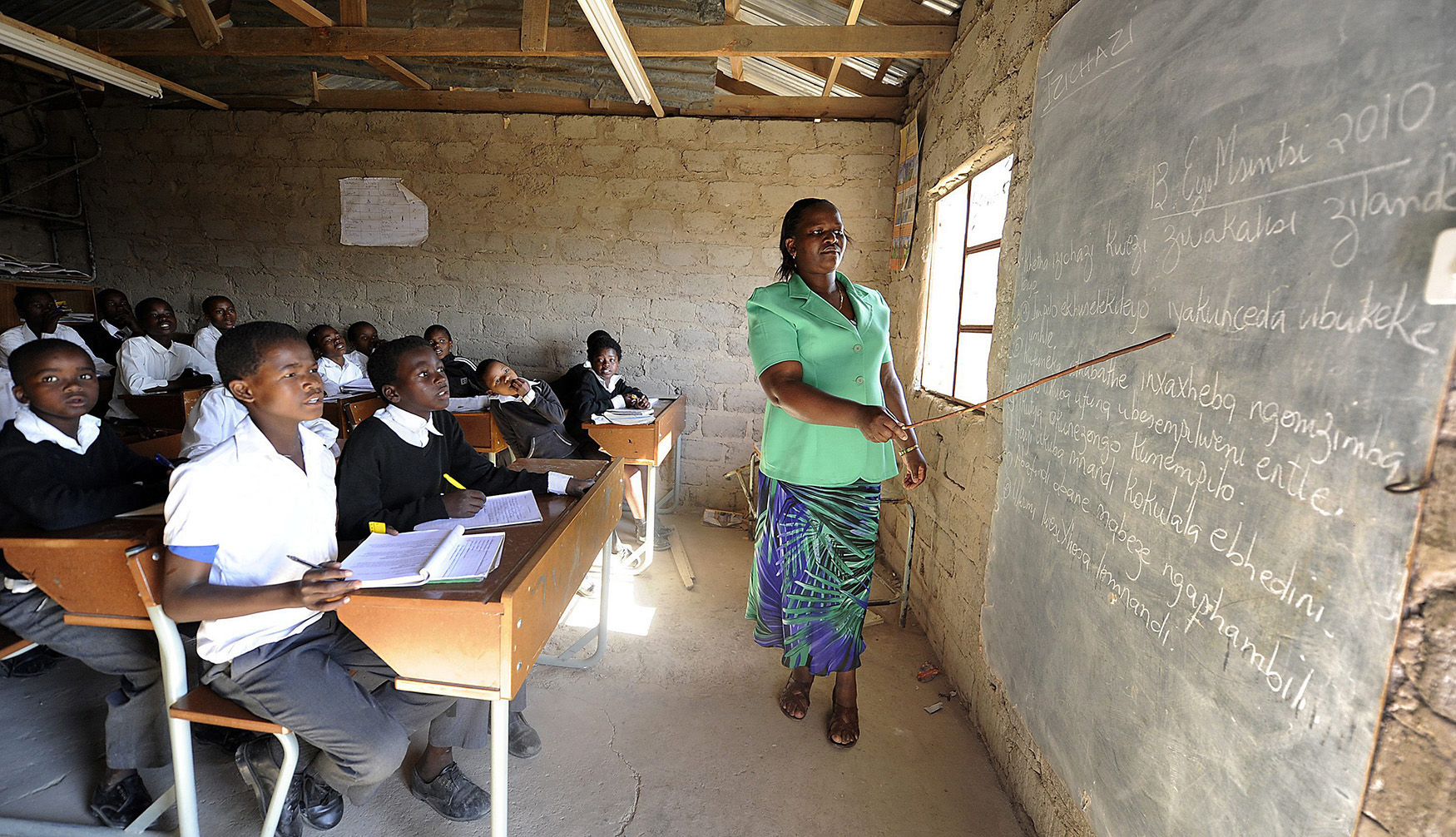
South Africa’s education system is built on an essential truth: teachers are the foundation of learning.
Ensuring that teachers are paid is critical. But when salary costs dominate the budget, infrastructure often becomes what policy experts quietly refer to as the “orphan expenditure.”
In many schools this leads to a familiar pattern:
-
Security fencing deteriorates without repair.
-
Toilets remain unusable for extended periods.
-
Computer labs sit empty due to connectivity costs.
-
Maintenance is reactive rather than preventative.
Principals are placed in an impossible position.
They are given the staff to teach, but not always the resources to maintain the environment where teaching happens.
The Fundraising Illusion
For decades, the default response to infrastructure gaps has been school fundraising.
Cake sales.
Civvies days.
Community drives.
These activities reflect the dedication of school communities, but they were never designed to solve multi-million rand infrastructure deficits. Expecting communities facing economic hardship to fund structural development places an enormous burden on parents who are already struggling with rising living costs. It also creates inequality between schools with affluent communities and those serving vulnerable populations.
The reality is simple: School fundraising is not a funding strategy.
It is a survival mechanism.
The Missing Layer in the Education Funding System
South Africa’s education system was designed around public funding for staffing and operations. What it did not fully develop was a structured system for mobilising private capital for school development. Yet private sector investment in social impact is significant.
Corporate Social Investment (CSI) spending in South Africa is estimated at over R11 billion annually, with education consistently ranking among the top funding priorities for corporates.
The challenge is not a lack of goodwill.
It is a lack of structured investment channels connecting schools to funders.
Many companies struggle with:
-
identifying credible schools
-
verifying governance structures
-
measuring impact outcomes
-
ensuring funds are used transparently
Without these assurances, potential investments often stall before approval.
Edu Empower SA: Building the Missing Infrastructure
Edu Empower SA was founded to address this exact structural gap.
Not by replacing government funding. But by complementing it.
The state funds the teachers.
Edu Empower focuses on mobilising resources for the school environment that enables those teachers to succeed.
Instead of relying on informal fundraising, Edu Empower creates structured pathways for education investment.
This includes:
1. Investment-Ready School Profiles
Schools are digitally profiled and verified, allowing funders to perform due diligence easily.
2. Professionally Packaged Development Projects
Infrastructure needs are translated into clear, costed investment opportunities that can be reviewed in corporate boardrooms.
3. Community Youth Economic Participation
Local youth are trained and placed within schools to support administration, digital visibility, and development initiatives.
4. Transparent Impact Tracking
Digital systems ensure funders can track how contributions translate into measurable outcomes.
From Donations to Education Investment
The future of school development will increasingly rely on structured public–private partnerships.
Corporates are no longer looking only to donate.
They want to invest in initiatives that demonstrate:
-
measurable impact
-
accountability
-
alignment with ESG and B-BBEE goals
Schools that can present transparent, well-structured development opportunities will be better positioned to access this capital.
A National Opportunity
South Africa’s education system does not face a single funding crisis.
It faces a funding structure challenge. Government carries the essential responsibility of funding educators.
But the broader ecosystem — communities, private sector partners, and development organisations — must play a role in strengthening school infrastructure.
When these layers work together, schools become more than places of instruction.
They become platforms for national development.
A Call to Action
To corporate leaders, your CSI investment can play a powerful role in strengthening the environments where millions of learners are educated.
To school principals, the future of school sustainability lies in building systems that attract structured investment rather than relying solely on traditional fundraising.
To education policymakers, innovative partnerships between public institutions and private capital may be one of the most effective ways to close the infrastructure gap.
The Future of School Sustainability
The R241.9 billion allocated to salaries ensures that teachers remain in classrooms. But thriving schools require more than staffing. They require safe buildings, functional infrastructure, digital access, and learning environments that inspire confidence and possibility.
Building that future will require new models of collaboration. Edu Empower SA is working to build those models — helping transform schools from underfunded institutions into investment-ready education ecosystems. Because the success of our education system will not be measured only by how much money is allocated. It will be measured by how effectively that investment reaches the classrooms where South Africa’s future is being shaped.
Edu Empower SA: The Business Office for South Africa’s Future.